Fire risk assessment in Didsbury
Large houses that were split into flats long ago.
- Written report to keep on file
- Clear action plan, highest risk first
- Price agreed before booking
Didsbury is a suburb in the south of the city of Manchester, and our fire risk assessors also cover Withington, Chorlton and Fallowfield. A lot of the housing in this part of the city is big older houses, and many of them were split into flats years ago.
Which guide applies
The gov.uk guide for blocks of flats is written for purpose-built blocks and says so. A house converted into flats is a different building. The floors are often timber joists, the stair was built for one family, and the walls between flats may be a single layer of plasterboard on studs. For these buildings assessors usually work to the LACORS guide, Housing fire safety, which covers converted flats as well as shared houses.
What the assessor checks
The stair. In a converted house it is usually the only way out for every flat, so each flat front door opening onto it matters. Is it a fire door, does it close by itself, and is there a gap under it you could slide a book through?
The floors. Between a ground floor flat and the one above there may be no more than floorboards and a lath and plaster ceiling. The assessor cannot see inside without opening it up, but they will look for clues: old ceilings, recessed lights cut into them, and any building control papers from the conversion.
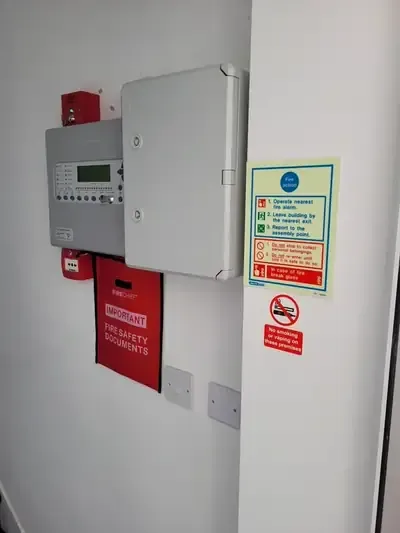
The alarm. Many converted houses have a smoke alarm inside each flat and nothing in the hall. The assessor will say what the hall needs, and whether the flat alarms should be linked to it.
Who is responsible
The freeholder, or the residents' company that owns the freehold, is usually the responsible person for the shared hall and stair. If one person owns the freehold and lives in a flat, the duty is still theirs.
Converted houses are priced from the number of flats and floors.
Tell us what the building is used for, the postcode and roughly how big it is. You get a written price back.